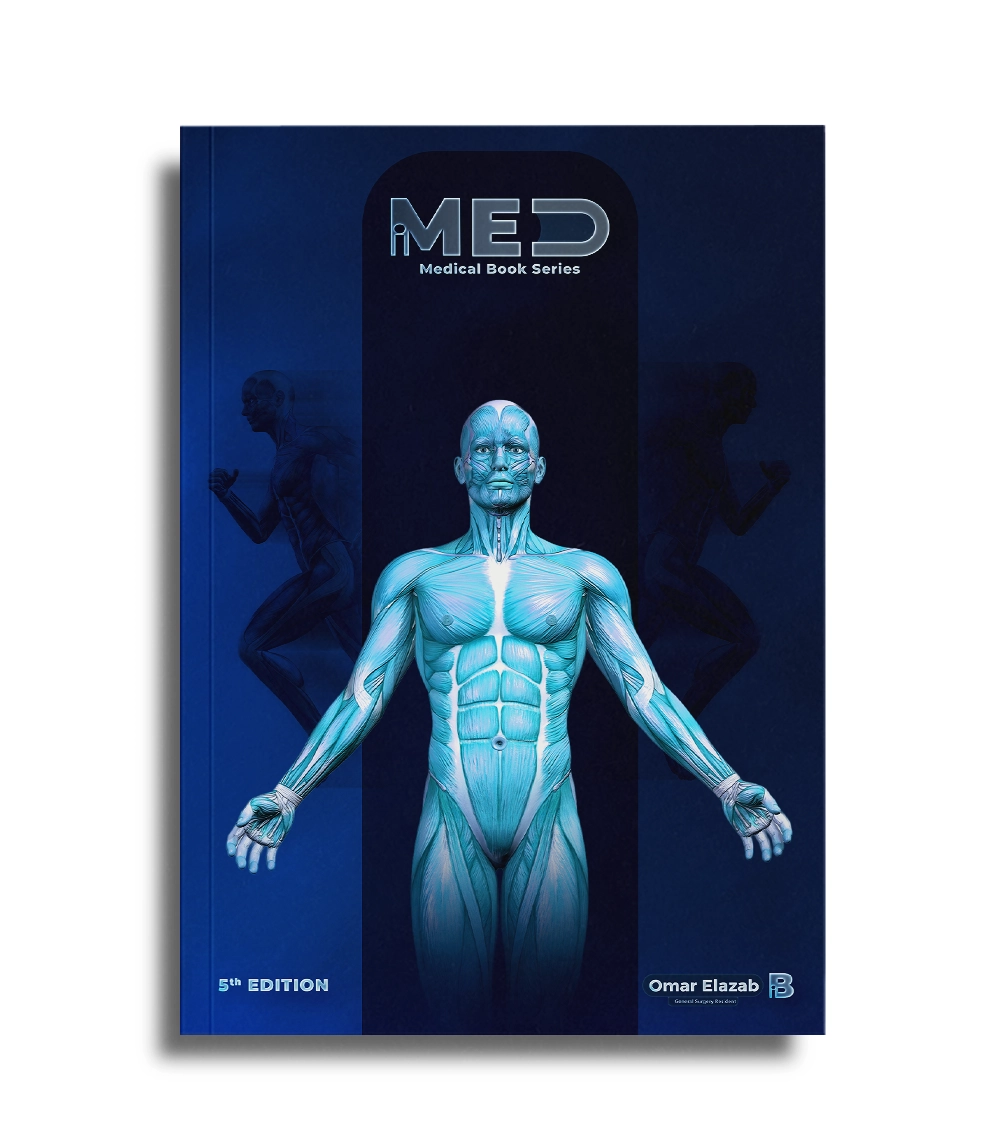
Introduction of Anatomy iNerd Book 2027 – 5th Edition
The Introduction of Anatomy iNerd Book 2027 is a comprehensive question bank and revision guide created for medical students studying the foundations of human anatomy. Through integrated MCQs, Short Essay Questions, and focused revision material, the book helps students understand essential anatomical principles, assess their knowledge, and prepare confidently for anatomy examinations.
Anatomy introduces students to a new scientific language involving positions, planes, structures, movements, and relationships between different parts of the body. Building a strong foundation at this stage makes studying regional anatomy and other medical modules much easier. This fifth edition uses active recall and question-based learning to reinforce important concepts and identify topics that need further revision.
Why Choose Introduction of Anatomy iNerd Book 2027?
- Integrated MCQs covering introductory anatomy concepts
- Short Essay Questions for written examination practice
- Focused revision of important anatomical terminology
- Questions suitable for medical and healthcare students
- Organized coverage of bones, joints, muscles, and movements
- Useful for active recall and self-assessment
- Supports preparation for practical and written examinations
- Helps students recognize and correct weak areas
- Suitable for integrated and module-based curricula
- Updated fifth edition for the 2027 academic year
The Introduction of Anatomy iNerd Book 2027 is designed to complement lectures, practical sessions, atlases, and anatomy textbooks. Students can learn a topic from their primary study material and then use the related questions to test understanding, strengthen memory, and practise applying anatomical information.
Introductory Anatomy Question Bank
Introductory anatomy provides the vocabulary and basic principles needed to describe the human body accurately. Students must understand anatomical positions, directional terms, planes, sections, movements, and structural relationships before progressing to detailed regional anatomy.
This question bank transforms these concepts into structured revision activities. Instead of relying only on repeated reading, students actively retrieve information and apply it to different question formats. This method makes it easier to discover whether a concept has been genuinely understood or simply memorized temporarily.
The Introduction of Anatomy iNerd Book 2027 can be used during the course, after individual lectures, or as a final revision resource before examinations.
Anatomical Terminology and Body Positions
Accurate anatomical terminology is essential for clear communication between medical professionals. Questions in this section reinforce the language used to describe structures and their relationships.
Important areas include:
- Standard anatomical position
- Supine and prone positions
- Superior and inferior relationships
- Anterior and posterior relationships
- Medial and lateral relationships
- Proximal and distal relationships
- Superficial and deep structures
- Internal and external relationships
- Ipsilateral and contralateral structures
- Common descriptive anatomical terms
Practising these terms through MCQs helps students distinguish between concepts that may appear similar and apply them accurately to different regions of the body.
Anatomical Planes, Sections and Movements
Understanding planes and movements is important for anatomy, clinical examination, medical imaging, and later surgical study. The book supports revision of the standard planes used to divide and describe the body.
Topics may include:
- Median and sagittal planes
- Coronal or frontal planes
- Transverse or horizontal planes
- Oblique sections
- Flexion and extension
- Abduction and adduction
- Medial and lateral rotation
- Circumduction
- Pronation and supination
- Inversion and eversion
- Elevation and depression
- Protraction and retraction
Question-based practice helps students visualize these movements and relate them to the joints and body regions where they occur.
Bones and Basic Osteology MCQs
Bones provide support, protect internal organs, store minerals, and form the framework upon which muscles act. Introductory osteology also teaches students how to identify common bony features and understand their functions.
Revision areas include:
- Classification of bones
- Parts of a typical long bone
- Bone surfaces and markings
- Processes, tubercles, spines, and crests
- Fossae, grooves, notches, and foramina
- Compact and cancellous bone
- Periosteum and bone marrow
- Blood supply of bones
- Basic principles of bone growth
- Clinical importance of common bone injuries
The Introduction of Anatomy iNerd Book 2027 helps students review these principles before studying the individual bones of the limbs, trunk, skull, and vertebral column in greater detail.
Joints and Basic Arthrology Questions
Joints connect bones while providing different degrees of stability and movement. The introductory study of joints requires students to understand structural classifications, functional classifications, and the features of synovial joints.
Important topics include:
- Fibrous joints
- Cartilaginous joints
- Synovial joints
- Components of a typical synovial joint
- Joint capsules and ligaments
- Articular cartilage
- Synovial membranes and fluid
- Types of synovial joints
- Factors affecting joint stability
- Basic movements occurring at joints
MCQs help students compare different joint types, while Short Essay Questions allow them to organize and explain classifications in a clear written format.
Muscles and Basic Myology Revision
Muscles produce movement, maintain posture, stabilize joints, and support many essential body functions. Introductory myology establishes the terminology used to describe muscle structure and action.
The revision content covers concepts such as:
- Skeletal, smooth, and cardiac muscle
- Muscle origin and insertion
- Prime movers or agonists
- Antagonists
- Synergists
- Fixators
- Tendons and aponeuroses
- Fascia and fascial compartments
- Basic muscle actions
- Functional relationships between muscles and joints
By solving questions after studying each concept, students can better understand how muscle attachments relate to movement and how different muscles work together.
Basic Neurovascular Anatomy
Students beginning anatomy must understand how nerves and blood vessels are organized and distributed throughout the body. These principles prepare them for regional anatomy and clinical subjects.
Relevant introductory concepts include:
- General organization of the nervous system
- Central and peripheral nervous systems
- Somatic and autonomic divisions
- Basic structure of peripheral nerves
- Arteries, veins, and capillaries
- Anastomoses and collateral circulation
- Basic lymphatic drainage
- Relationship between nerves and blood vessels
- General principles of blood supply
- Clinical relevance of neurovascular injury
The Introduction of Anatomy iNerd Book 2027 uses integrated questions to connect these foundational concepts with their practical anatomical importance.
Skin, Fascia and Supporting Structures
The superficial structures of the body have important protective, mechanical, and clinical roles. Focused questions may address the basic anatomy of the skin, superficial fascia, deep fascia, bursae, tendon sheaths, and related supporting tissues.
Understanding these structures helps students interpret physical examination findings and prepares them to study wounds, infections, injections, surgical incisions, and the spread of fluids through anatomical spaces.
Integrated MCQs and Short Essay Questions
MCQs train students to recall information quickly, interpret wording carefully, compare closely related concepts, and eliminate incorrect choices. They are particularly useful for testing anatomical terminology, classifications, structural features, and functional relationships.
Short Essay Questions assess a different group of skills. Students must retrieve information without prompts, arrange important points, explain classifications, and present a complete answer using accurate anatomical language.
Combining these formats makes the Introduction of Anatomy iNerd Book 2027 useful for preparing for different examination systems. It also encourages students to move beyond passive reading toward active application.
Anatomy Revision Guide for Medical Students
A revision guide should make important information easier to retrieve without replacing detailed lectures, textbooks, or practical study. Students can use the focused revision material to revisit essential definitions, classifications, relationships, and high-yield facts.
For effective study, complete one introductory anatomy topic and then solve the related questions without checking the answers. Mark every incorrect or uncertain response and return to the original explanation or atlas when needed.
Repeat difficult questions after several days. Before the examination, solve mixed MCQ sets under timed conditions and write selected Short Essay answers from memory.
Who Is This Book For?
This book is suitable for:
- Undergraduate medical students beginning anatomy
- Students following integrated medical curricula
- Dental and healthcare students studying basic anatomy
- Learners searching for introductory anatomy MCQs
- Students preparing for written anatomy examinations
- Students practising Short Essay Questions
- Learners who need structured anatomy revision
- Students who want to improve active recall
- Anyone building a foundation before regional anatomy
How to Study with Introduction of Anatomy iNerd
Begin by studying the relevant lecture, textbook chapter, or practical material. Next, solve the corresponding questions in the Introduction of Anatomy iNerd Book 2027 without viewing the answers.
Separate your mistakes into three groups: missing information, misunderstood concepts, and careless reading errors. Review the correct concept, write a brief note if necessary, and repeat the question after several days.
Use diagrams, models, and an anatomical atlas whenever a question involves spatial relationships. Anatomy is visual, so combining question practice with visual study will improve understanding and long-term retention.





اشترى الكتاب محمد علي (عميل موَثَّق) –
⭐⭐⭐⭐⭐
اشترى الكتاب انس عبدالغفار الصاوى ابوزيد (عميل موَثَّق) –
⭐⭐⭐⭐⭐
اشترى الكتاب يوسف محمد لطفي (عميل موَثَّق) –
⭐⭐⭐⭐⭐
اشترى الكتاب مالك أحمد (عميل موَثَّق) –
⭐⭐⭐⭐
اشترى الكتاب جودي احمد صلاح (عميل موَثَّق) –
⭐⭐⭐⭐⭐
اشترى الكتاب جويل جورج (عميل موَثَّق) –
⭐⭐⭐⭐⭐