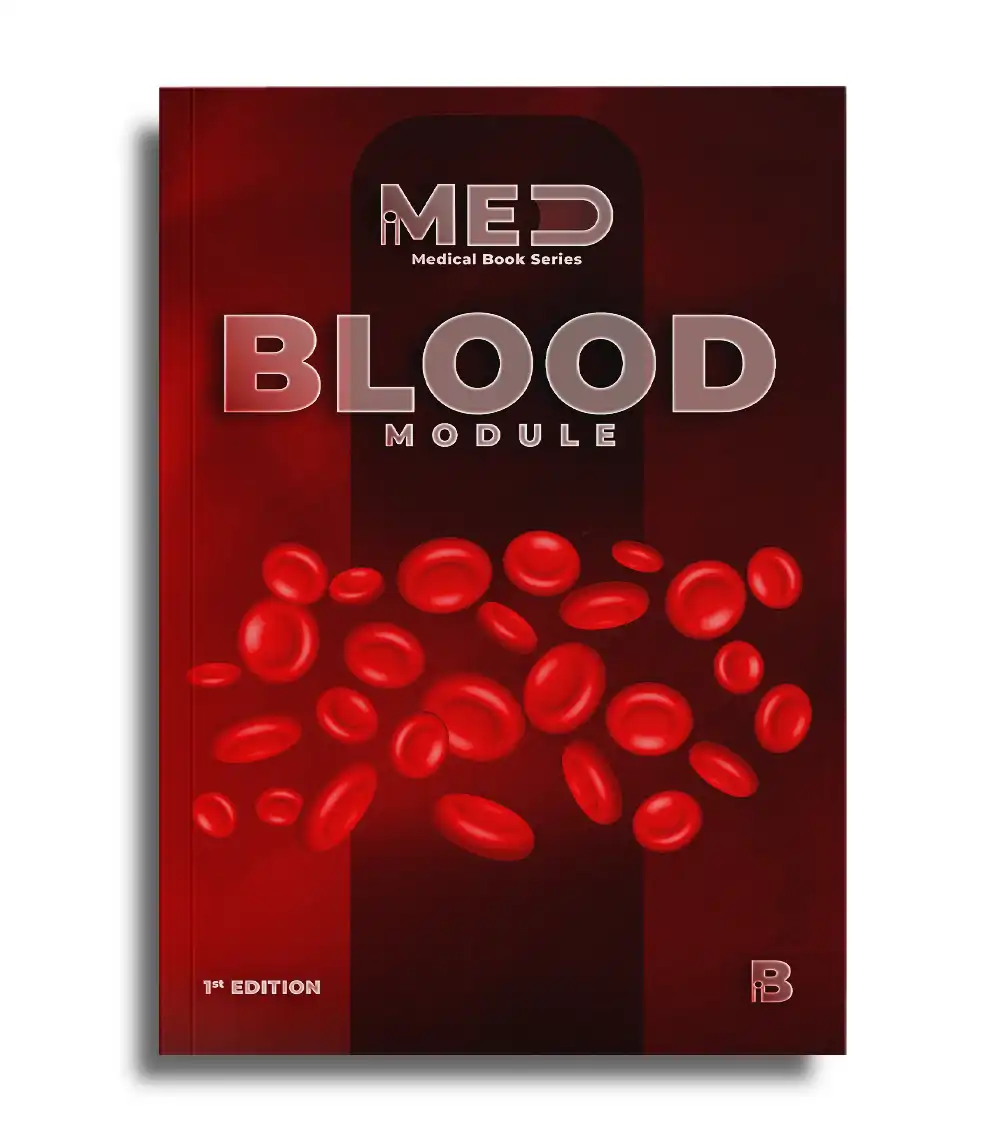
Blood Module iMed Book 2026 – 1st Edition
The Blood Module iMed Book 2026 is a comprehensive, concept-driven hematology study guide created for undergraduate medical students following integrated and module-based curricula. Unlike a question bank, this 325-page book focuses on clear explanation, visual learning, clinical integration, and structured understanding across the complete Blood Module.
Complex hematology topics become easier when information is presented in a logical sequence and supported by diagrams, tables, illustrations, and focused summaries. The Blood Module iMed Book 2026 is designed to help students connect basic medical sciences with disease mechanisms and clinically relevant concepts instead of memorizing disconnected facts.
Why Choose Blood Module iMed Book 2026?
- Complete Blood Module coverage in one organized resource
- 325 pages of structured hematology explanation
- Clear, concise, and concept-focused writing
- High-quality diagrams, medical illustrations, and tables
- Integrated coverage of basic and applied medical sciences
- Focused summaries for efficient revision
- Clinical highlights that connect theory with medical practice
- Designed for integrated and module-based medical curricula
- Suitable for first study, continuous revision, and exam preparation
The book provides the theoretical foundation students need before moving to question-based assessment. It can be used as the main explanation source during the module, then paired with the iNerd Blood Module Question Bank for active practice and self-assessment.
Integrated Blood Module Study Guide
The Blood Module brings together anatomy, histology, physiology, biochemistry, pathology, pharmacology, microbiology, parasitology, and clinical applications. Studying these subjects separately may make the module feel fragmented. The Blood Module iMed Book 2026 organizes them into a connected learning pathway that shows how normal blood structure and function relate to disease and treatment.
This integrated approach helps students understand relationships such as how erythropoiesis connects to anemia, how hemoglobin structure relates to inherited disorders, how hemostasis links to bleeding and thrombosis, and how laboratory findings reflect underlying pathological processes.
Anatomy, Histology, and Physiology Foundations
The book establishes the essential foundations of the blood and lymphatic systems, including:
- Anatomy of lymph nodes, spleen, and thymus
- Histology of blood cells
- Structure and organization of bone marrow
- Erythropoiesis and blood cell production
- Red blood cell physiology
- White blood cell physiology
- Platelet function
- Hemostasis and normal coagulation mechanisms
These foundations help students build a clear mental model before studying hematological disorders. Diagrams and organized tables simplify relationships that are often difficult to understand from text alone.
Hemoglobin and Blood Biochemistry
Biochemistry is integrated with physiology and pathology so that students can understand the clinical importance of each pathway. Major areas include:
- Hemoglobin structure and function
- Heme and globin synthesis
- Iron absorption, transport, and storage
- Folate metabolism
- Red blood cell glycolysis
- Pentose phosphate pathway in red blood cells
- Biochemical foundations of important hematological disorders
The Blood Module iMed Book 2026 presents these mechanisms in an organized format that makes them easier to follow, compare, and recall during examinations.
Hematology Pathology and Blood Disorders
The pathology sections connect normal processes with the mechanisms and manifestations of disease. Coverage includes important concepts related to:
- Red blood cell disorders
- Classification and mechanisms of anemia
- Megaloblastic anemia
- White blood cell disorders
- Lymphatic diseases
- Leukemia overview
- Platelet and coagulation disorders
- Bleeding disorders
- Hypercoagulable states and thrombosis
Rather than listing facts without context, the book explains how pathological changes produce characteristic clinical and laboratory findings. This supports deeper understanding and prepares students for both academic assessment and later clinical learning.
Blood Pharmacology
The pharmacology content links treatment principles to the mechanisms studied in physiology, biochemistry, and pathology. Important areas include:
- Drug therapy used in different types of anemia
- Iron, folate, and related therapeutic principles
- Drugs used in bleeding disorders
- Pharmacological principles related to coagulation
- Drug-induced blood disorders
- Antimalarial drugs
This integrated presentation helps students understand why a treatment is used instead of memorizing drug names in isolation.
Microbiology, Parasitology, and Blood Infections
The Blood Module also includes infectious and parasitic conditions that affect blood cells, the lymphatic system, or hematological function. Relevant topics include:
- Viral infections affecting red and white blood cells
- Bacteremia and septicemia concepts
- Vector-borne bacterial diseases
- Mosquito-borne parasitic diseases
- African and American trypanosomiasis
- Immunopathological effects of parasites involving blood
Bringing these subjects into the same module helps students recognize how infectious diseases interact with hematology rather than treating them as unrelated topics.
Designed for Visual and High-Retention Learning
Dense hematology information is easier to understand when it is visually organized. The Blood Module iMed Book 2026 uses high-quality formatting, medical images, diagrams, comparison tables, and concise summaries to reduce unnecessary complexity and make important relationships visible.
Tables support rapid comparison between closely related conditions, while diagrams help explain pathways and mechanisms. Focused summaries allow students to revisit high-yield information without rereading every paragraph during final revision.
Who Is This Hematology Book For?
The book is suitable for:
- Undergraduate medical students studying the Blood Module
- Students following integrated medical curricula
- Students looking for a clear Hematology Book for Medical Students
- Learners who prefer diagrams, tables, and visual explanation
- Students building their foundation before solving MCQs
- Students preparing for module assessments and final examinations
- Learners who need one organized reference throughout the academic year
Whether students are meeting hematology for the first time or revising before an assessment, the Blood Module iMed Book 2026 provides the structure needed to move from basic understanding to confident application.
How to Study with Blood Module iMed
Begin each topic by reviewing its explanation, diagrams, and summary tables. Pause after every major concept and recall the mechanism without looking at the page. Create brief notes only for relationships or classifications that require additional revision.
After completing a section, use the related iNerd Blood Module questions to test understanding. Mark weak areas, return to the relevant iMed explanation, and then repeat the questions. This creates an effective learning cycle: understand with iMed, practise with iNerd, analyze mistakes, and revise the explanation again.
Book Specifications
- Title: Blood Module – iMed Book
- Edition: 1st Edition
- Publication year: 2026
- Number of pages: 325
- Format: Paperback
- Language: English
- Subject: Blood Module and Hematology
- Intended audience: Undergraduate medical students
- Contributors: Mahmoud Abubakr, Nour Mohamed, Ahmed Abdullah, Mustafa Samy, and Ahmed Elbana, under the supervision of Dr. Omar Elazab
- Publisher: Dar El Teb for Publishing and Distribution
- Category: Hematology Books / Medical Study Guides
Order the Blood Module iMed Book 2026 and build a stronger hematology foundation through clear explanations, visual learning, integrated medical sciences, and focused revision in one professionally organized study guide.









اشترى الكتاب مروة م (عميل موَثَّق) –
ممتاز جدا